
Are AI Dating Photos Worth It? The Honest Truth [2026]
 David
David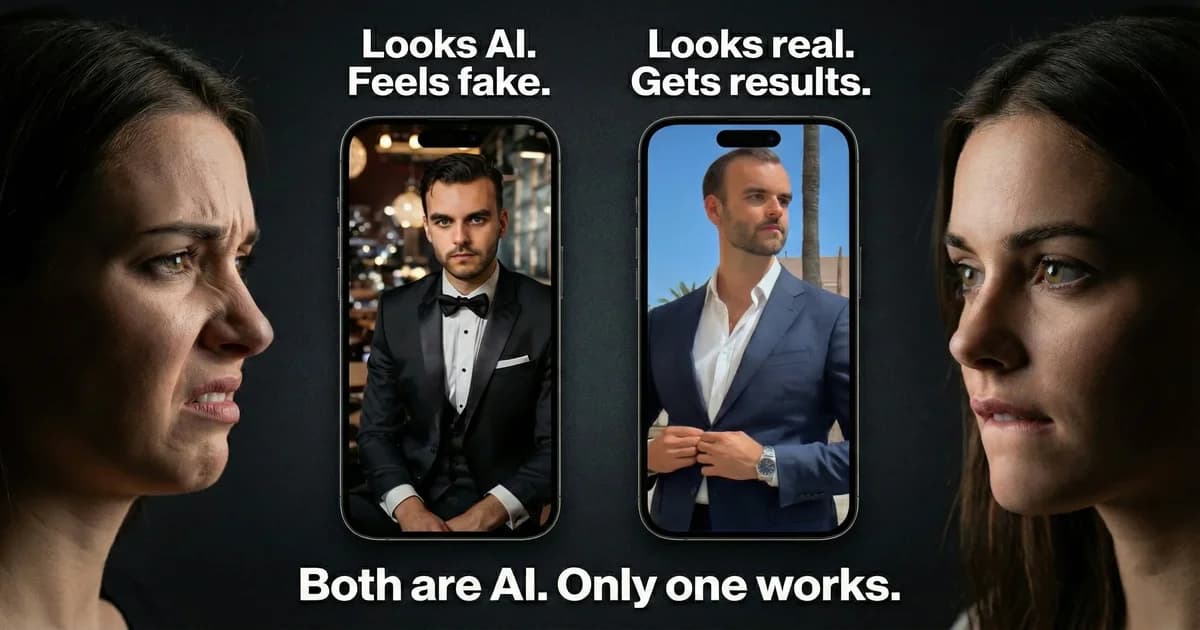
AI dating photos are worth it if they look natural and pass detection systems. Most don't.The market is flooded with cheap AI tools that produce obviously fake results: blurred backgrounds, plastic skin, dead eyes, and the same generic pose in every shot. These photos don't just fail to attract matches. They can get your account shadowbanned.
Here's the problem: even when people can't consciously identify AI photos (a Norton study found only 46% could when tested), they often feel something is "off." That subconscious unease kills attraction. And dating apps don't rely on human judgment. Bumble's Deception Detector blocks 95% of fake accounts using AI that analyzes pixel-level patterns humans can't see. The technology exists to create photos that work. Most services just aren't using it correctly.
Photographically realistic dating photos that look like phone shots, not studio output. Free to try, no credit card.
Try AI dating photos free3 free photos · 14-day money-back
This guide breaks down when AI dating photos are worth the investment, why most fail, what separates quality AI photos from obvious fakes, and how to avoid wasting money on tools that hurt your results.
Key Takeaways
- Quality AI photos ($50-200) are worth it; cheap tools ($10-30) backfire
- Dating apps actively detect AI: Bumble blocks 95% of fakes at the pixel level
- Signs of fake AI: blurred backgrounds, plastic skin, dead eyes, identical poses
- Quality AI looks like smartphone shots with lifestyle variety and natural appearance
- Users report 5-10x more matches with quality AI photos
The Real Cost of Dating Photos
Before evaluating AI options, consider what you're comparing against. Professional dating photographers who specialize in dating apps charge $2,000 to $5,000for a session. That's just the photographer fee.
| Option | Cost | Time Investment | Results |
|---|---|---|---|
| Professional photographer | $2,000-5,000+ | Travel, hotels, 2-3 days off work | Often looks staged |
| Cheap AI tools | $10-30 | Minutes | Obviously fake, detection risk |
| Quality AI service | $50-200 | Hours | Natural, optimized, 0% AI detected in tests |
| DIY smartphone photos | Free | Ongoing frustration | Inconsistent, usually poor |
The professional photographer route requires booking flights, taking time off work, paying for hotels, and spending multiple days in awkward staged photoshoots. The results often look exactly like what they are: a guy who paid thousands of dollars to stand in front of a camera because he couldn't get good photos naturally.
Quality AI photos eliminate all of that friction while producing results that look like a friend with photography skills captured you in natural moments. The ROI calculation isn't close.
Why Most AI Dating Photos Backfire
The majority of AI photo services optimize for the wrong thing. They create images that look impressive in isolation but fail on dating apps. The photos might seem polished, but they trigger suspicion, detection systems, and the uncanny valley response that kills attraction.
Here's what cheap AI tools consistently get wrong:
The Blurred Background Problem
Generic AI tools default to blurring backgrounds because they've been trained on professional photos that use bokeh. The result looks like every other AI photo on the platform. Women have learned to recognize this artificial bokeh as a red flag.
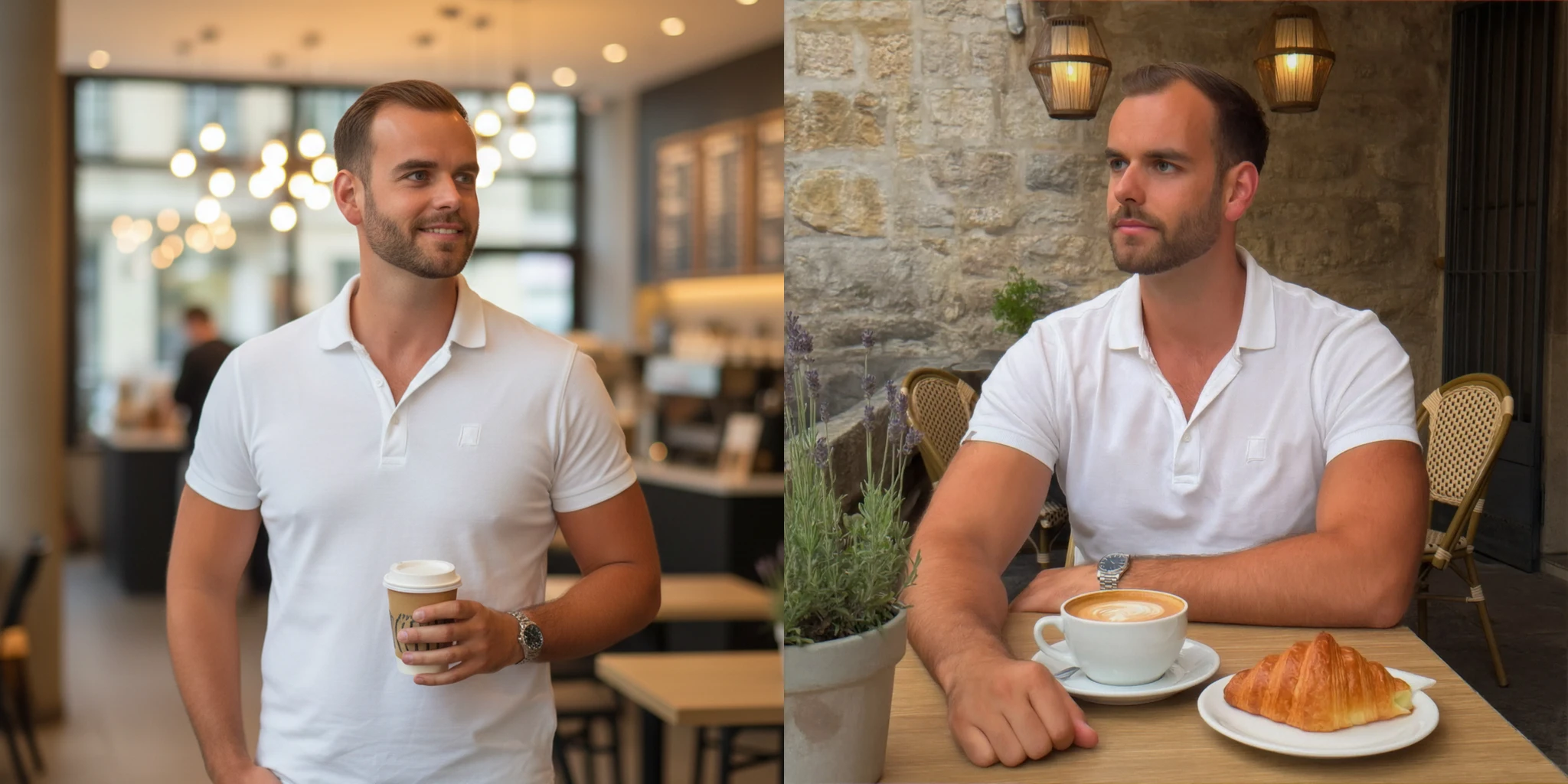
Real smartphone photos have context. You can see where the person actually was. That background information tells a story about lifestyle and personality. Blurred backgrounds tell a story about AI generation.
The Plastic Skin Problem
Cheap AI smooths skin texture to hide imperfections. The result looks like a video game character rather than a human being. Natural skin has pores, subtle texture variations, and imperfections that signal authenticity.
This over-processing creates what researchers call the uncanny valley effect. The image looks almost human but something feels wrong. That subconscious discomfort translates directly into left swipes.
The Dead Eyes Problem
Eyes are where AI generation most frequently fails. Generic tools produce eyes that lack the light reflections, micro-expressions, and depth that make someone look alive and present. The technical term is "catchlights": the reflections of light sources visible in eyes that signal genuine presence.
When those catchlights are missing or inconsistent, the result looks hollow. People can't articulate why, but they feel it. Dead eyes kill connection before it starts.
Your photos are the problem. We fix that.
Upload a few selfies. Get natural, phone-style photos that actually look like you — ready in about 2 minutes.
Get Started FreeNo credit card · Free to start
The 6 Signs of Fake AI Photos
Even when people can't consciously spot AI, they sense something is wrong.Three quarters of UK dating app users report encountering deepfakes regularly, and they're learning to distrust certain visual patterns. If your photos trigger any of these red flags, they're hurting your results.
- Artificially blurred backgrounds with no real environment visible. Every photo looks like it was taken in a void.
- Plastic, over-smoothed skin with no visible pores or natural texture. Looks like a wax figure.
- Dead or inconsistent eyeslacking natural light reflections. The "nobody home" look.
- Identical poses across all photos. Standing and smiling the same way in every shot shows no personality.
- Doesn't quite look like a real person. Facial features subtly altered toward generic attractiveness rather than individual character.
- No lifestyle variety. No activities, no context, no sense of who this person actually is or what they do.
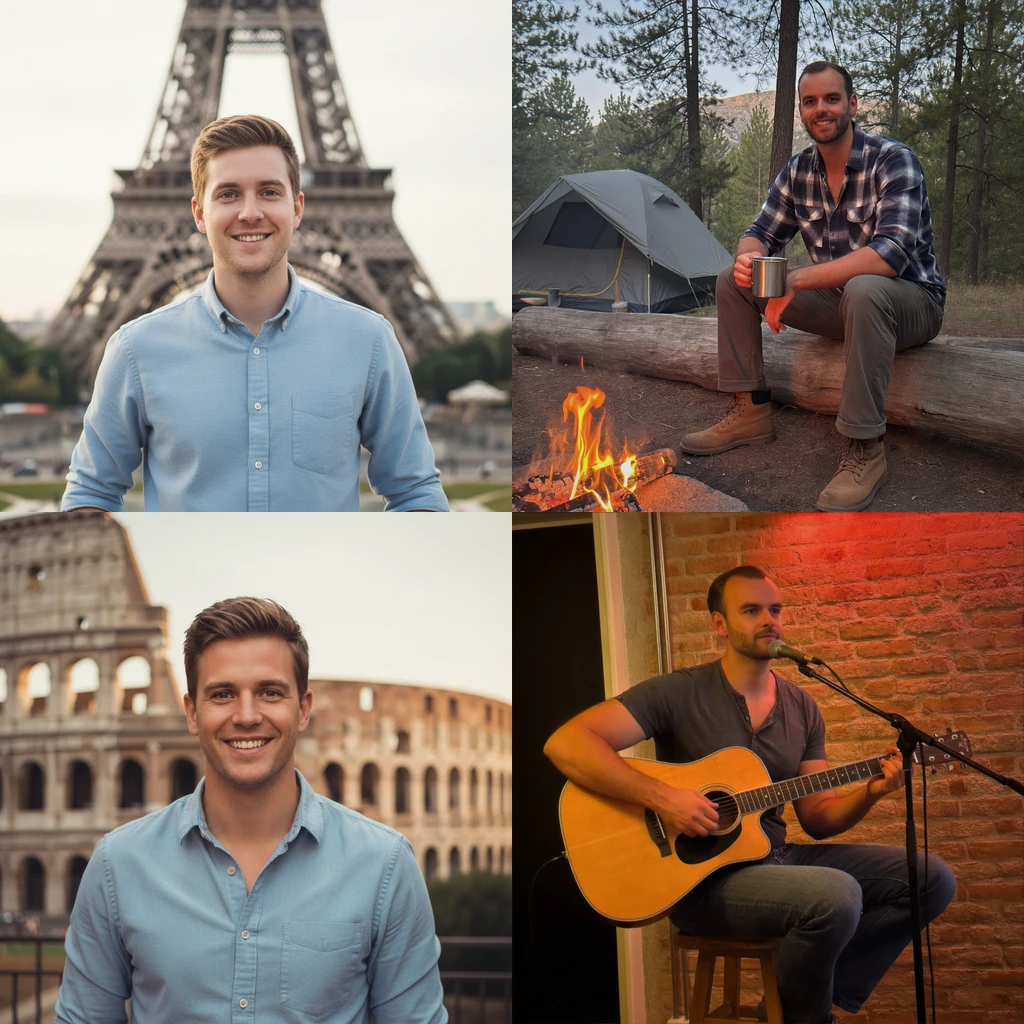
If you're evaluating an AI photo service, request samples. If every sample has these characteristics, the service will hurt your dating results rather than help them.
The Female Gaze Problem
Most AI photo tools are built by men optimizing for what men think women want. Generic AI produces photos that impress other guys but fall flat with women. It's the same try-hard energy that makes professional photographer photos underperform.
| What Men Think Works | What Actually Works |
|---|---|
| Smiling in every photo, awkward posed shots | Variety of expressions showcasing personality |
| Impressive backgrounds (cars, skylines) | Authentic lifestyle contexts |
| Perfect, polished appearance | Natural, approachable presentation |
| Standing poses showing physique | Activity shots showing personality |
| Professional studio lighting | Natural smartphone-style lighting |
Quality AI photos should look like a friend who happens to be good at photography captured you living your actual life. Not like you hired someone to make you look impressive. For a deeper dive into what actually generates attraction, see our guide on what women actually look for in dating photos.
The Detection Risk Is Real
Dating apps are actively scanning for AI-generated photos.Tinder licenses Amazon's AWS image recognition technology. Bumble's "Deception Detector" blocks 95% of fake accounts. These systems don't evaluate how photos look to humans. They analyze pixel-level patterns that betray AI generation.
Generic AI photos carry telltale signatures in their underlying data:
- Synthetic noise patterns that differ from real camera sensors
- Texture generation artifacts invisible to humans but detectable by algorithms
- Compression structures that don't match smartphone photography
- Missing or inconsistent metadata (camera model, GPS, timestamps)
When detection systems flag your photos, the consequences range from verification requests to shadowbanning. A shadowban makes your profile invisible to other users while appearing normal to you. You can swipe forever and never understand why you're getting zero matches.
We've tested this extensively. Generic AI tools like Remini consistently fail detection tests. Our detailed breakdown of AI photo detection includes side-by-side test results showing exactly what passes and what gets flagged.
What Quality AI Photos Actually Look Like
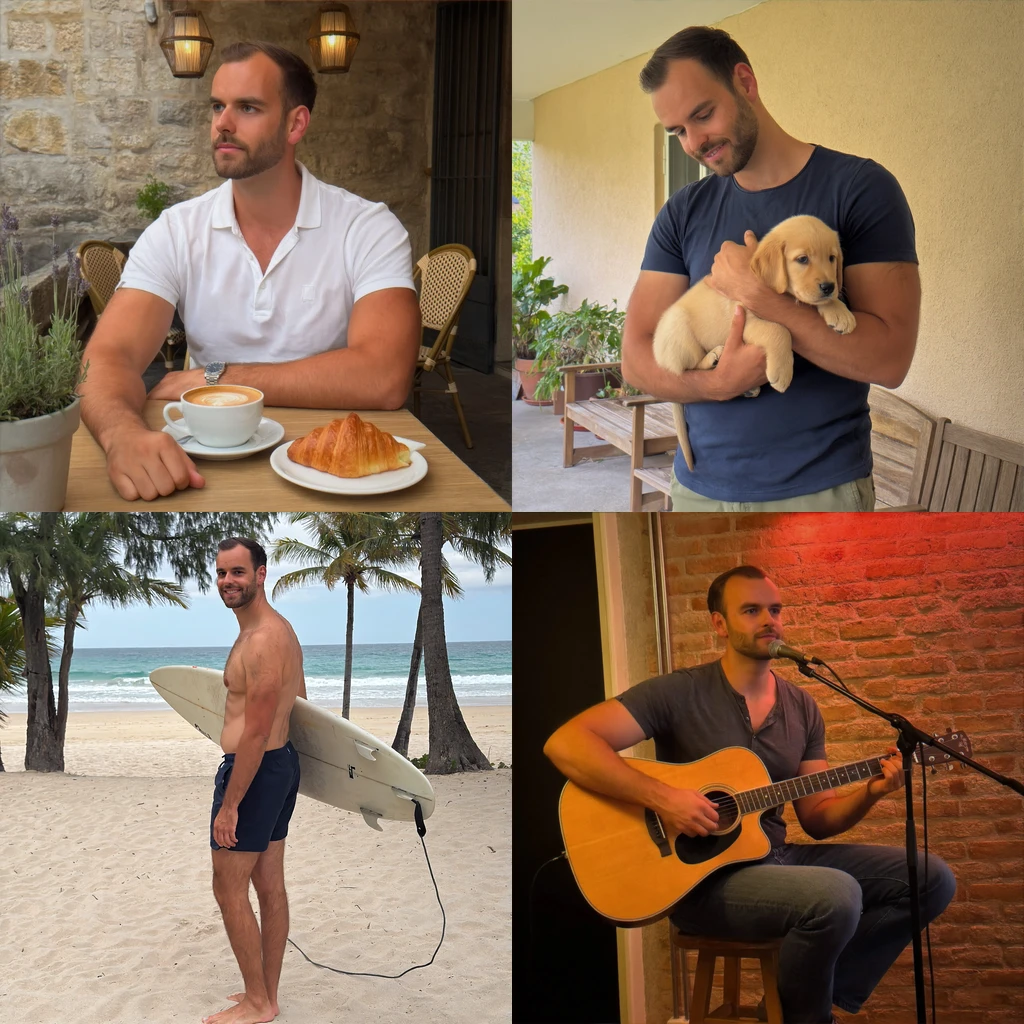
The goal isn't impressive AI photos. It's photos that look like a smartphone captured you at your best. That means natural lighting, real environments, genuine expressions, and variety that shows personality.
Quality AI dating photos share these characteristics:
They pass as smartphone photos.The lighting, background detail, and overall aesthetic match what you'd expect from an iPhone in good conditions. Not studio perfection. Natural authenticity.
They preserve your actual appearance. Cheap AI tools subtly morph facial features toward generic attractiveness. This creates disappointment when you meet in person. Quality services train custom models on your specific features to enhance presentation while keeping you recognizably you.
They include lifestyle variety. Not just headshots. Activities, social contexts, environments that suggest an interesting life. The kind of variety that would take months to accumulate organically.
They're optimized for the female gaze.Genuine expressions, approachable body language, contexts that answer the question "would this person be fun to spend time with?" Not poses designed to impress other men.
They pass detection systems. The pixel-level output matches natural smartphone photography. No synthetic signatures that trigger flags.
Your photos are the problem. We fix that.
Upload a few selfies. Get natural, phone-style photos that actually look like you — ready in about 2 minutes.
Get Started FreeNo credit card · Free to start
Results: What Actually Happens
Users with quality AI photos report 5-10x more matchescompared to their previous profiles. This isn't because they suddenly became more attractive. It's because their photos finally communicate who they are in a way that creates interest.
Research from the University of Amsterdam found that photo quality has roughly 10x the impact of bio quality on match rates. A one standard deviation improvement in photos boosted matches from 25% to 43%. The same improvement in bio? Just 2%.
The math is simple. Dating apps are visual platforms. The algorithm shows your photos to potential matches. Those people decide in under one second whether to swipe right. Everything else, your bio, your job, your prompts, only matters after photos create initial interest.
My own experience went from 2-3 matches per month to 30-40 per week after fixing my photos. Same person. Same face. Completely different results.
Are AI Dating Photos Worth It? The Verdict
Quality AI photos are worth it. Cheap AI photos are worse than no AI at all.
The $29 tools flooding the market produce obviously fake results that trigger detection systems, create uncanny valley discomfort, and signal inauthenticity to matches. Using them actively hurts your dating results.
Quality AI photo services cost more because they do more: custom model training, natural output that passes detection, female gaze optimization, lifestyle variety. The results look like photos a skilled friend took rather than obvious AI generation.
For most people, this is the best option. Professional photographers cost 10-50x more, require significant time investment, and often produce results that look staged rather than natural. DIY smartphone photos rarely capture you at your best without serious photography knowledge.
The question isn't whether AI photos are worth it. It's whether you choose tools that actually work or waste money on services that make your profile worse.
“As an ML engineer, I built GetMatches because I could see exactly where every other AI photo tool was failing: they were optimizing for visual impressiveness rather than detection-safe output. Dating apps don't evaluate photos the way humans do — they scan for pixel signatures. Getting that right is an engineering problem, not just a design problem.”
What to Look For in an AI Photo Service
Before paying for any AI dating photo service, verify these criteria:
- Request sample photos. Do they look like smartphone shots or obvious AI? Can you see real backgrounds or just blur?
- Ask about detection. Have they tested their output against AI detection tools? What were the results?
- Check for variety. Do they produce lifestyle shots or just headshots? Can you get activity photos, social contexts, different environments?
- Evaluate natural appearance. Do sample photos look like real people or wax figures? Is skin texture preserved or plastified?
- Consider the training process. Do they train a custom model on your features or run generic one-size-fits-all processing?
If a service can't answer these questions or their samples fail these criteria, find a different option. The cheap route will cost you more in wasted time and missed matches than the price difference.
Frequently Asked Questions
Sources
- Norton Cyber Safety Insights Report: "Romance Reimagined" (February 2025) - Gen Digital
- Sumsub/Censuswide UK Dating App Deepfakes Research (February 2025)
- Witmer, Rosenbusch & Meral: "The relative importance of looks, height, job, bio, intelligence, and homophily in online dating" - University of Amsterdam (2025), Computers in Human Behavior Reports
- Bumble "Deception Detector" AI safety documentation
- Tinder VP of Engineering on AWS Rekognition — AWS re:Invent 2018 (YouTube)
Get smartphone-realistic AI dating photos in minutes. The option we built because we couldn't find a good one.
Try AI dating photos free3 free photos · No credit card
Written by David
Over a decade in the dating industry, portrait photographer, and machine learning engineer. For years I barely got any matches on dating apps, so I went deep — studied the science, asked women what actually works, ran experiments on my own profile. When I realized AI could generate the exact photos I knew I needed, I built GetMatches. I lived the problem, so I built the solution.
Want more tips like this?
Join guys who get weekly dating app strategies. Free, no spam.
Unsubscribe anytime. No spam, ever.